The way SG diners choose where to eat has shifted. Instead of scrolling Google Maps reviews, a growing share ask ChatGPT "best Thai restaurant Tiong Bahru" or tell Gemini "recommend a family-friendly brunch Singapore." When AI answers, it names three to four restaurants — and if yours is not one of them, the booking goes elsewhere. Most SG restaurants are still optimising only for Google.
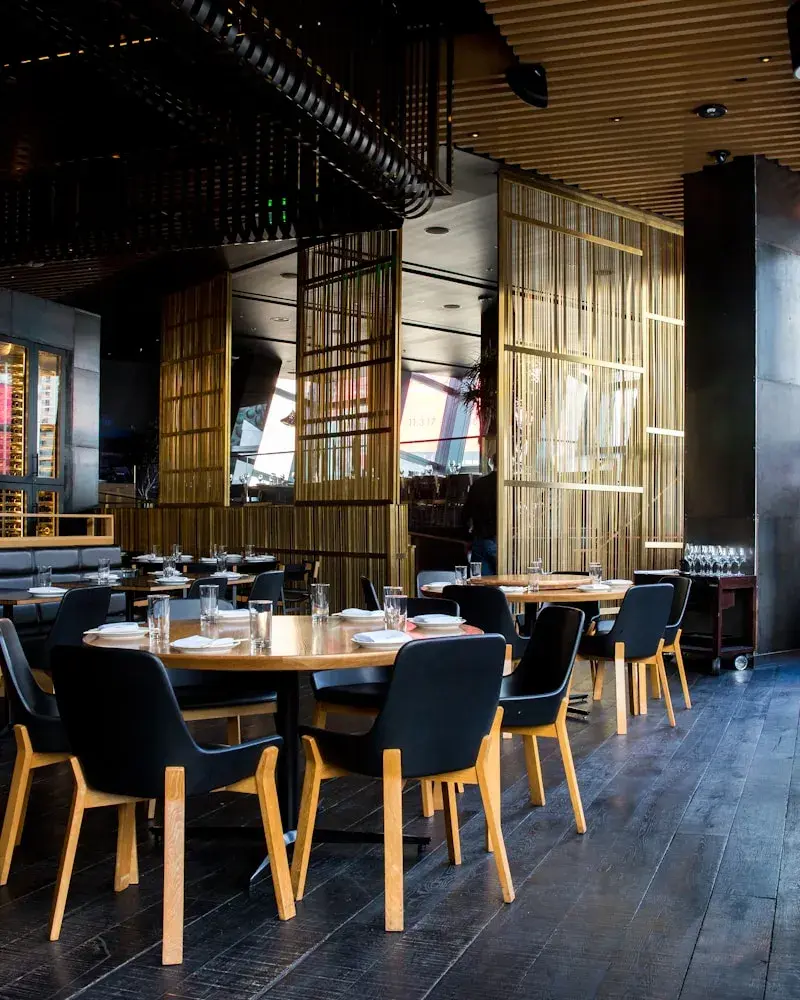
Restaurant AI Search Optimisation Singapore
GEO Agency for Restaurants in Singapore
When a diner asks ChatGPT 'best dim sum Chinatown' or tells Gemini 'recommend an Italian restaurant for date night Tanjong Pagar,' the AI names three to four restaurants. If yours is not one of them, that is a reservation that went to a competitor. We build restaurant GEO that gets you cited across ChatGPT, Gemini, Perplexity, Copilot, and Google AI Mode.



The Challenge
Diners Are Asking AI — Not Just Scrolling Google Maps
The Google-Only Strategy Gap
Most restaurant marketing agencies still focus only on Google Maps SEO and social. They leave AI search untouched — even though ChatGPT, Gemini, and Perplexity are becoming the new front door for restaurant discovery, especially for occasion and dietary-specific queries.
AI Reads Different Signals
A five-star Google Maps listing does not guarantee an AI citation. ChatGPT and Gemini evaluate menu structured data, content authority, review sentiment across Burpple and HungryGoWhere, and third-party mentions. Different signal set — different optimisation work.
The Open-Lane Window
Most SG restaurants are not yet investing in GEO. The brands that invest in 2026 own AI citations for their cuisine and neighbourhood before competitors catch on — building defensible visibility that compounds as AI usage grows.
What We Deliver
Six Restaurant GEO Workstreams Every Operator Needs
We run restaurant GEO as a six-workstream system — AI visibility audit, restaurant schema, citable answer-first content, third-party authority building, prompt monitoring, and multi-platform coverage. Built to win the AI citation for your cuisine and catchment.
AI Visibility Audit
Test 20-30 restaurant prompts across ChatGPT, Gemini, Perplexity, Copilot, and Google AI Mode — "best [cuisine] [neighbourhood]," "where to take parents for [occasion]." Reveals exactly which restaurants AI recommends instead of yours.
Restaurant Schema & Entity
Restaurant, Menu, MenuItem, FoodEstablishment, Review, and AggregateRating schema. Defines cuisine, price range, location, dietary attributes, and signature dishes so AI tools understand exactly what your restaurant offers and who it suits.
Citation-Ready Content
Answer-first descriptions of your cuisine, signature dishes, dining experience, and location advantages. The fact-dense, comparison-friendly content AI models pull from when recommending restaurants to diners.
Third-Party Authority Building
Strengthen presence on the sources AI trusts most — Google Reviews, TripAdvisor, Burpple, HungryGoWhere, and SG food authority sites. Citations from these sources are what AI models use to rank trust.
Prompt Monitoring
Track your restaurant's Brand Visibility Score, Citation Rate, and Share of Voice across every major AI platform every month. Quantify exactly how often AI recommends your restaurant versus competitors.
Multi-Platform Coverage
ChatGPT, Gemini, Google AI Mode and AI Overviews, Perplexity, Copilot. Each pulls recommendations from different sources — our work covers all five so your restaurant gets cited regardless of which AI tool the diner asks.
Why Jraft Creative
Restaurant GEO That Fills Tables
We run the GEO playbook for our own agency — and the same methodology for restaurant clients. We map the exact cuisine-and-neighbourhood prompts SG diners use, build the schema and content stack that earns the citation, and track Brand Visibility Score across all five major AI platforms monthly.
Restaurant-Specific Prompt Research
We map the exact prompts SG diners use — "best Korean BBQ Tanjong Pagar," "halal Western Tampines," "where to take parents for dim sum" — and optimise against those specific queries, not generic GEO templates.
Measurable AI Metrics
Brand Visibility Score, Citation Rate, Share of Voice across ChatGPT, Gemini, Perplexity, Copilot, Google AI Mode — tracked monthly with the actual prompts and citations. Not vanity "AI score" reports.
GEO Wired to SEO
We do not run GEO in isolation. The same schema, content, and authority signals that earn AI citations also strengthen classical SEO — so the investment compounds across both channels rather than splitting effort.
The Buyer Funnel
Where AI Search Shows Up in the Diner Journey
Singapore diners move through five stages. GEO is the emerging dominant channel in Choose — the moment a diner asks AI for a recommendation and the AI returns three to four restaurant names. AI citations also reinforce Discover when diners follow up on a friend rec by asking ChatGPT to "tell me more about [restaurant]."
Discover
AI surfaces unprompted restaurant mentions (GEO-led)
Choose
AI returns 3-4 names to the diner prompt (GEO-led)
First Visit
AI-cited diners convert at high intent (pre-qualified)
Return
Brand recall reinforces next-time AI mention
Advocate
Reviews and UGC compound back into AI training data
FAQ
Restaurant GEO — Questions Answered
What is restaurant AI search optimisation (GEO)?
Restaurant GEO (Generative Engine Optimisation) is the discipline of getting your restaurant cited by ChatGPT, Gemini, Perplexity, Copilot, and Google AI Mode when diners ask "best [cuisine] in [neighbourhood]" or "where to take parents for dim sum." It covers AI visibility audits across the platforms, restaurant-specific schema (Restaurant, Menu, MenuItem, AggregateRating), citable answer-first content, and authority building on the third-party sources AI models pull from (Google Reviews, TripAdvisor, Burpple, HungryGoWhere).
Why is GEO important for restaurants in Singapore?
SG diners increasingly ask ChatGPT, Gemini, and Perplexity for restaurant recommendations instead of scrolling Google Maps. When AI answers these queries, it names three to four restaurants — and if yours is not one of them, that is a reservation that goes to a competitor. Most SG restaurants still focus only on Google Maps SEO and ignore AI, leaving an open lane for restaurants that invest in GEO now.
How is GEO different from regular restaurant SEO?
Restaurant SEO is built for the Google Maps three-pack and organic blue-link rankings. GEO is built for AI-generated answers. They share some signals (Google reviews, GBP completeness, structured data) but GEO also evaluates content structure (answer-first writing), third-party citations (Burpple, HungryGoWhere, TripAdvisor presence), and entity-level signals (Restaurant and MenuItem schema) that classical SEO does not directly reward. Most restaurants need both — SEO for the three-pack, GEO for the AI mention.
How long before restaurant GEO results appear?
Restaurant GEO citations can start appearing in ChatGPT, Gemini, and Perplexity within 4-8 weeks of content and schema work going live. The compounding effect — your restaurant becoming the default mention for a specific cuisine-and-neighbourhood combination — builds over 3-6 months as more sources cite you and AI models update their training and retrieval data.
Which AI platforms do you optimise for?
We optimise for ChatGPT, Google Gemini, Google AI Overviews and AI Mode, Perplexity, and Microsoft Copilot. Each platform pulls restaurant recommendations from different sources — Perplexity favours fresh web content and Burpple-style listings; ChatGPT leans on training-data-era reviews and structured content; Google AI Mode prioritises GBP signals and AI-friendly schema. Our work covers all five so your restaurant gets cited regardless of which AI tool the diner asks.
Ready to Get Started?
Let Us Get Your Restaurant Cited by AI
Book a free consultation and tell us about your restaurant — concept, catchment, current AI visibility. We'll respond within 24 hours with a tailored restaurant GEO plan.